Greetings, fellow nature lovers. Today, I’m sharing some information about a plant species endemic to the Mediterranean region. To find it, I had to head into the mountains and climb over 200 meters to photograph it. This raises a few questions: why grow in such a harsh, challenging habitat? Why high altitudes or rocky heights? Why is it never seen in urban areas? Was the trek worth it? Let’s take a look at the post...🚩📍
Saludos, amigos amantes de la naturaleza. Hoy les traigo un contenido para aprender sobre una especie de planta que es endémica de la región mediterránea. Para conseguirla, tuve que ir a la montaña y escalar más de 200 metros para fotografiarla, y allí surgen algunas dudas: ¿por qué crecer en un hábitat tan hostil y complicado?, ¿por qué en zonas altas o peñascos?, ¿no es posible verla en zonas urbanas?, ¿valió la pena llegar aquí? Veamos el post...🏔️🗺️

Where is the plant located?📍🚩/ ¿Dónde se ubica la planta?🌍📸
 Coordinates: 38.47972866761185, -9.000625523852744 📍🚩/ Coordenadas: 38.47972866761185,-9.000625523852744 🌏📸

 https://flora-on.pt/
There is an interesting detail about this plant: it does not grow in the country's interior. Why is that? The answer is simple: the coast of Portugal features rocky terrain, granite areas, and cliffs reaching up to 200 meters—conditions in which the plant thrives. In contrast, the interior lacks such mountains. This has both positive and negative implications for its biology; because its range is limited, it faces a higher risk of vulnerability compared to more widespread plant species.📸🏞️
Noten algo interesante en la planta, y es que no crece en el interior del país. ¿Por qué será? La respuesta es simple: en las costas de Portugal hay rocas, zonas de granito y acantilados de hasta 200 metros, ¡y ella crece en esas condiciones!, mientras que en el interior no hay montañas. Esto tiene un efecto positivo y negativo para su biología; al ser áreas reducidas, siempre tendrá un riesgo de vulnerabilidad superior a otras plantas que son más cosmopolitas.🌄🌿


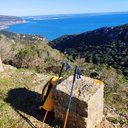
This is the reserve where I photographed the species—"Arrábida"—which I know very well from having hiked many trails in these mountains. You could say that growing in these poor, basic-pH soils on rocky outcrops allows the plants to persist for many generations, especially since the area is designated for "total protection" and altering the biodiversity is prohibited; however, I need to climb much higher—to the mountain peak—to locate it📸🌍
Esta es la reserva donde fotografié la especie: "Arrábida". La conozco muy bien porque ya hice muchos senderos en estas montañas. Podría decirse que crecer en estos suelos pobres, con pH básico en salientes rocosas, hace que se preserven por muchas generaciones, ya que la zona es considerada área "de protección total" y está prohibido alterar la biodiversidad; pero necesito subir mucho más, al pico de la montaña, para localizarla.🗺️🌏

Any interesting ecological facts?📍🚩/ ¿Algunos datos ecológicos interesantes?🌍📸
 The specimen we are studying📍🚩/ Ejemplar que estudiamos 🌏📸
=================================================================================
En:
They are very hardy; their fleshy leaves store water for months, allowing them to withstand extreme climates📍
It changes color when under stress; it can turn reddish or purple📍
It is Mediterranean aloe vera; locals used to crush it and apply it to burns and wounds.📍
One of the few plants that do not need much soil to grow; they literally grow in rock crevices and on roofs.📍
=================================================================================
Es:
Son muy resistentes; sus hojas carnosas almacenan agua durante meses, lo que les permite resistir climas extremos.📍
Cambia de color cuando está en situación de estrés; se puede tornar rojiza o púrpura.📍
Es el aloe vera mediterráneo; anteriormente, los locales la machacaban para aplicarla en quemaduras y heridas.📍
Una de las pocas plantas que no necesitan mucha tierra para crecer; literalmente, lo hacen en grietas de rocas y tejados. 📍
=================================================================================
Architectural ally📍🚩/ Aliada arquitectonica🌏📸


Nowadays, ecological architecture is gaining significant importance in both residential and commercial sectors. But what does this have to do with Sedum sediforme? Believe it or not, because it thrives in poor soil—requiring neither irrigation nor maintenance—it is often planted on the roofs of homes and commercial buildings to create green, eco-friendly architecture. Why? It’s simple: they act as natural insulators that also help combat climate change. Pretty amazing, right?📸😅
En la actualidad, la arquitectura ecológica está tomando mucho valor en el área habitacional y comercial. ¿Cómo así? ¿Qué tiene que ver esto con Sedum sediforme? Aunque no lo creas, como crece en un sustrato bastante pobre, sin riego ni cuidados, suele colocarse en techos de casas o locales para crear una arquitectura ecológica vegetal. ¿Por qué? Fácil: son aislantes naturales que contribuyen a combatir también el cambio climático. Qué locura, ¿no?🌿🌄🏞️


Any other ecological information?📍🚩/ Algun otro dato ecologico?🌏📸


 bio
bio
Check out these interesting facts: the plant has been recorded at altitudes of up to 700 meters, and I am currently at around 300 meters! I am currently in the off-season, as it blooms in the spring—between March and April—much like orchids. It has lovely yellow flowers and tolerates temperatures below 10 degrees well; in the mountains here, temperatures never drop below freezing🌄🏞️
Fíjense en estos datos interesantes: la planta ha sido registrada hasta a 700 metros de altura, ¡y yo estoy actualmente a unos 300 más o menos! Estoy en una época fuera de floración, ya que florece entre marzo y abril, en primavera, como las orquídeas. Tiene flores amarillas bonitas y aguanta bien temperaturas inferiores a los 10 grados; en esta sierra nunca se presencian temperaturas bajo cero.📸🌏


I’d like to take this opportunity to invite some users who are passionate about science to the @abneagro @emiliorios contest; if they win, they could receive 100 Hives—the prize for first place!
Quiero aprovechar en invitar a unos usuarios que les apasiona la ciencia para el concurso @abneagro @emiliorios si ganan este concurso pueden recibir 100 hives es el premio al primer lugar!
Do you want to support this Venezuelan who is breaking records in Europe? Subscribe to my channel / ¿Quieres apoyar a este venezolano que está batiendo récords en Europa? Suscríbete a mi canal.🙂🧠🦾👍


We appreciate your work and your publication has been hand selected by the geography curation team on behalf of the Amazing Nature AN Community. Keep up the good work!
https://x.com/jlufer/status/2107838065016463421?s=20
This post has been manually curated by @steemflow from Indiaunited community. Join us on our Discord Server.
Do you know that you can earn a passive income by delegating to @indiaunited. We share more than 100 % of the curation rewards with the delegators in the form of IUC tokens.
Here are some handy links for delegations: 100HP, 250HP, 500HP, 1000HP.
100% of the rewards from this comment goes to the curator for their manual curation efforts. Please encourage the curator @steemflow by upvoting this comment and support the community by voting the posts made by @indiaunited.
¿Cómo estás, querido amigo @biologistbrito?
Qué planta tan genial has conseguido; sin dudas valió la pena todo el esfuerzo que has hecho para poder fotografiarla.
La naturaleza es asombrosa, hace a las plantas de tal manera que algunas de ellas pueden crecer en los terrenos menos pensados.
Genial que existan áreas protegidas allí, donde los diferentes tipos de plantas pueden prosperar. y desarrollarse
Increíble cómo las plantas se adptan a las condiciones, y puean vivir con poca tierra, y en sus hojas puedan acumular el agua nevesaria para supsistir
Es increíble que una planta tan pequeña pueda hacer tanto para contribuir con el cambio climático. Me imagino verlas crecer en los tejados de las propiedades de la zona.
Excelente el trabajo de investigación; aprecio que compartas toda esta información.
Que tengas un gran día.
How are you, my dear friend @biologistbrito?
What a fantastic plant you’ve found; the effort you put into photographing it was undoubtedly worth it.
Nature is amazing; it shapes plants in such a way that some can grow in the most unexpected places.
It’s great that there are protected areas there where various types of plants can thrive and flourish.
It is incredible how plants adapt to conditions, surviving with very little soil and storing the water they need to live within their leaves.
It is amazing that such a small plant can play a role in addressing climate change. I can picture them growing on the rooftops of local properties.
Excellent research work; I appreciate you sharing all this information.
Have a great day.
More information - Support - Reports - Discord
Support engagement with a delegation to topcomment:
50HP - 100HP - 250HP - 500HP - 750HP - 1000HP - 1500HP
Thanks, Maracucho, for this information.
Look at how many natural options we have to combat climate change, and yet we go for the complicated and polluting ones.
I liked this fact about the plant:
“...they are natural insulators that also help combat climate change.”
And most importantly, there are people like you who care about this.
Greetings from a Maracucho in Venezuela.
Blessings, @biolog
More information - Support - Reports - Discord
Support engagement with a delegation to topcomment:
50HP - 100HP - 250HP - 500HP - 750HP - 1000HP - 1500HP
Good evening, @biologistbrito. You ask why some plants choose precisely the toughest environments to live in? Well, so you’d go looking for them—what would you do without a challenge?
Your post got me thinking about how life finds a way to flourish anywhere. Great work, my friend.
Sending you a big hug.
Saludos @biologistbrito, una planta muy peculiar, que crece en el interior del país en la zona de la Arrabida, al verla pensé que se trataba de un Esparrago
Feliz miércoles!
¡Enhorabuena!
✅ Has hecho un buen trabajo, por lo cual tu publicación ha sido valorada y ha recibido el apoyo de parte de CHESS BROTHERS ♔ 💪
♟ Te invitamos a usar nuestra etiqueta #chessbrothers y a que aprendas más sobre nosotros.
♟♟ También puedes contactarnos en nuestro servidor de Discord y promocionar allí tus publicaciones.
♟♟♟ Considera unirte a nuestro trail de curación para que trabajemos en equipo y recibas recompensas automáticamente.
♞♟ Echa un vistazo a nuestra cuenta @chessbrotherspro para que te informes sobre el proceso de curación llevado a diario por nuestro equipo.
🏅 Si quieres obtener ganancias con tu delegacion de HP y apoyar a nuestro proyecto, te invitamos a unirte al plan Master Investor. Aquí puedes aprender cómo hacerlo.
Cordialmente
El equipo de CHESS BROTHERS
Trail de Curación / Curation Trail
¡Bienvenidas las Delegaciones / Welcome Delegations
| 200 HP | 250 HP | 500 HP | 750 HP | 1000 HP |
Thanks for your contribution to the STEMsocial community. Feel free to join us on discord to get to know the rest of us!
Please consider delegating to the @stemsocial account (85% of the curation rewards are returned).
Consider setting @stemsocial as a beneficiary of this post's rewards if you would like to support the community and contribute to its mission of promoting science and education on Hive.
great botanical adventure through the Arrábida mountains, @biologistbrito! Climbing over 200 meters was totally worth it for this record.
Congratulations @biologistbrito! You have completed the following achievement on the Hive blockchain And have been rewarded with New badge(s)
Your next payout target is 25000 HP.
The unit is Hive Power equivalent because post and comment rewards can be split into HP and HBD
You can view your badges on your board and compare yourself to others in the Ranking
If you no longer want to receive notifications, reply to this comment with the word
STOPCheck out our last posts:
Lo que explica de esta planta demuestra elmpapel y el valor de cada elemento natural en nuestro planeta. Y, si usted intenta llevarla a su casa y la saca de su hábitat natural es muy posible que la planta deje de vivir porque no tiene las condiciones de vida que ella necesita para resistir el paso del tiempo. No conocía de su importancia para combatir el cambio climático y coincido con @emiliorios de que muchas veces desconocemos que detalles naturales como estos sirve para un propósito tan necesarios y nos vamos a otros que, muchas veces, causan gastos, daños y no siempre cumplen sus objetivos. Gracias por compartir. Feliz semana. Salud y saludos.
What this plant tells us demonstrates the role and value of every natural element on our planet. And if you try to take it home and remove it from its natural habitat, it is very likely that the plant will die because it lacks the living conditions it needs to survive over time. I wasn’t aware of its importance in combating climate change, and I agree with @emiliorios that we are often unaware that natural features such as these serve such a vital purpose, whilst we turn to other solutions which, all too often, incur costs, cause damage and do not always achieve their objectives. Thank you for sharing. Have a good week. Best wishes and regards.