Heart Disease and Heart Failure

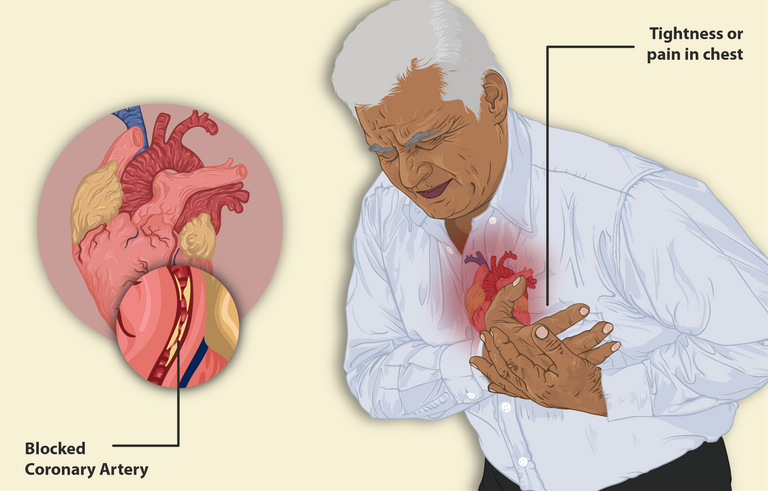
Heart disease is increasing in recent times and heart attack is also skyrocketting in recent times. According to the Center for Disease Control (CDC), 697,000 people died of heart disease in the United States in the year 2020. One thing that we should be careful of in recent times is heart attack.
Let me start with letting you know that what you eat or do not eat can be a major factor for risk of developing heart disease which could lead to a heart attack. Diseases such as Type 2 Diabetes, Met Syndrome, HTN, Obesity, Smoking, Trig's, Overweight, LDL , High CRP, and Inactivity are factors that can lead to coronary heart diseases but how do they cause it but before we get to heart attack, let's first discuss hypertension.
Hypertension is the increase in blood pressure in the blood vessel, or the blood vessels are under a high pressure. When the arterial pressure is high, the blood being pumped out will be difficult as the heart has to do more work to get blood through it. The more fluid flowing through the circulatory phase, the higher the pressure of blood, this happens as a result of the kidney not functioning properly, thereby causing fluid to be retained in the body. This can also occur as a result of increased salt in the blood vessels causing more fluid in the blood vessels. Also resistance can lead to hypertension as it increases the blood pressure through the vessels. When the arteries get stiff as a result of fatty deposit to the arteries leading to plaque, or as a result of aging, then it can lead to increased resistance which will lead to high blood pressure. This can lead to coronary diseases leading to heart failure or heart attack.

Heart Failure
The heart pumps blood to two places which are the body and the lungs. The oxygenated blood leaves through the left ventricle to the body, and the de-oxygenated blood is pumped to the lungs to get oxygenated again. Depending on the demand for blood by the body possibly because of activities, is how much blood the heart will pump out. If a person is performing exercise, the heart beats faster causing an increase in blood circulation to the area based on demand. Heart failure has to do with the inability of the heart to be able to pump blood, and heart failure can be divided into two which are Systolic Heart Failure and Diastolic Heart Failure.
Systolic heart failure happens when the heart isn't pumping blood out enough to the body as a result of the muscles of the heart not adding enough force. When the muscle contract, they do not squeeze enough blood out of the heart to the body or the lungs. The muscles are smaller or weaker thereby causing a reduced stroke volume and not allowing enough blood out. Ventricular inotrophy is possible as a result of diseases or some other factors that leads to the death of the heart muscle cells (cardiomyocytes). With systolic heart failure, the walls of the ventricle are smaller and the ventricle is bigger. Diseases such as Cardiomyopathy (weakens the blood muscle), Coronary diseases (where the heart doesn't supply blood to its muscle), Heart valve disease leading to regurgitation and reducing the amount of blood being pumped out, Stenosis of the aorta is another reason for heart failure.Another condition that can lead to systolic heart failure is Arrhythmia, which is irregular heart rhythm which could be too slow, fast or it can be uncoordinated.
Diastolic heart failure is similar to that of systolic heart failure not allowing the heart to pump blood to the body but with diastolic heart failure, the heart doesn't get filled with enough blood thereby leading to a low ejection rate of blood out of the heart. Diastole is the phase where the heart ventricle gets filled with blood and with Diastolic heart failure there is not enough blood getting into the ventricle of the heart. Conditions such as ventricular muscle growth after dead tissues in the ventricle show up. This can lead to lower compliance during filling.
The left side of the heart pumps blood to the body while the right side of the heart pump blood to the lungs so symptoms of heart failure at different side of the heart display different symptoms. This failure can be forward or backward. When the heart is refusing to pump blood to the body then it is forward failure and when a person isn't receiving enough blood into the body, it can lead to fatigue, loss of urine production, the heartbeat becomes irregular and rapid. With backward failure, the heart is unable to receive blood into itself. This can manifest as a congestion and that is why it is known as congestive heart failure which will cause back up of fluid to the heart. When blood isn't going to the lungs properly, it would lead to fatigue, tiredness, as a result of less oxygen. Increased heartbeat and palpitation.
In the early phase of heart failure people can experience risk factors of heart failure such as hypertension, Coronary artery diseases. Treatment would include exercise which increases heart efficiency, reduction of salt, and medications such as ACE inhibitors, Vasodilators, hydralazine, and beta-blockers. In the late phase of heart failure especially towards the right side of the heart, treatment include diuretics such as Aldosterone inhibitors, and Calcium channel inhibitors.
https://www.cdc.gov/heartdisease/facts.htm
https://www.who.int/health-topics/cardiovascular-diseases#tab=tab_1
https://www.nhs.uk/conditions/heart-failure/
https://www.ncbi.nlm.nih.gov/books/NBK430873/
https://www.ncbi.nlm.nih.gov/pmc/articles/PMC4961993/
https://www.ahajournals.org/doi/10.1161/CIRCRESAHA.121.318172
Thanks for your contribution to the STEMsocial community. Feel free to join us on discord to get to know the rest of us!
Please consider delegating to the @stemsocial account (85% of the curation rewards are returned).
Thanks for including @stemsocial as a beneficiary, which gives you stronger support.