Letras Inspiradoras: ¿Pensarlo bien o no pensarlo tanto? [ESP/ENG]



¿Pensarlo bien o no pensarlo mucho? Una interrogante que envuelve dos extremos: Parálisis e impulsividad.
Me siento cómoda en medio de decisiones "bien tomadas", con un plan definido, por lo general no me dejo llevar por arrebatos.
Pero hay momentos en los que siento que no debería pensarlo tanto.
Bienvenidos a "Letras inspiradoras", este cálido espacio en el que podemos compartir nuestras experiencias, nuestra perspectiva o visión, en formato iniciativa, como una manera de encender la chispa a un diálogo que nos enriquece de alguna manera.
Espero que estas letras te atrapen y encuentres tu dosis de inspiración del día.
Should I think it through or not overthink it? A question that spans two extremes: paralysis and impulsiveness.
I feel comfortable making “well-thought-out” decisions with a clear plan; I generally don’t let myself get carried away by sudden impulses.
But there are times when I feel like I shouldn’t overthink things.
Welcome to "Inspiring Words", this welcoming space where we can share our experiences, our perspectives, or our visions in the form of initiatives—as a way to spark a dialogue that enriches us in some way.
I hope these words capture your attention and that you find your daily dose of inspiration.

Esta semana, en relación a una decisión importante y muy bien meditada, me permití dudar.
Me di cuenta de que lo que haría sería diferente, si no lo pensaba mucho.
Muchas veces creemos que si analizamos minuciosamente cada paso que damos, hay menos espacio para el error. Sin embargo, evaluar las cosas en exceso suele esconder miedo a equivocarnos y a la incertidumbre.
En lo personal, soy poco tolerante a la incertidumbre, sé que hay variables que no puedo controlar, pero las que dependen de mí, prefiero definirlas lo mejor que pueda, al menos eso intento.
Pero también puedo entender que pensar demasiado, tarde o temprano, se convierte en postergación, con un bello disfraz de prudencia.
This week, regarding an important and very carefully considered decision, I allowed myself to have doubts.
I realized that I would have acted differently if I hadn’t thought about it so much.
We often believe that if we thoroughly analyze every step we take, there’s less room for error. However, overanalyzing things usually masks a fear of making mistakes and of uncertainty.
Personally, I have little tolerance for uncertainty. I know there are variables I can’t control, but for the ones that depend on me, I prefer to define them as best I can—at least that’s what I try to do.
But I can also understand that overthinking, sooner or later, turns into procrastination, disguised as prudence.
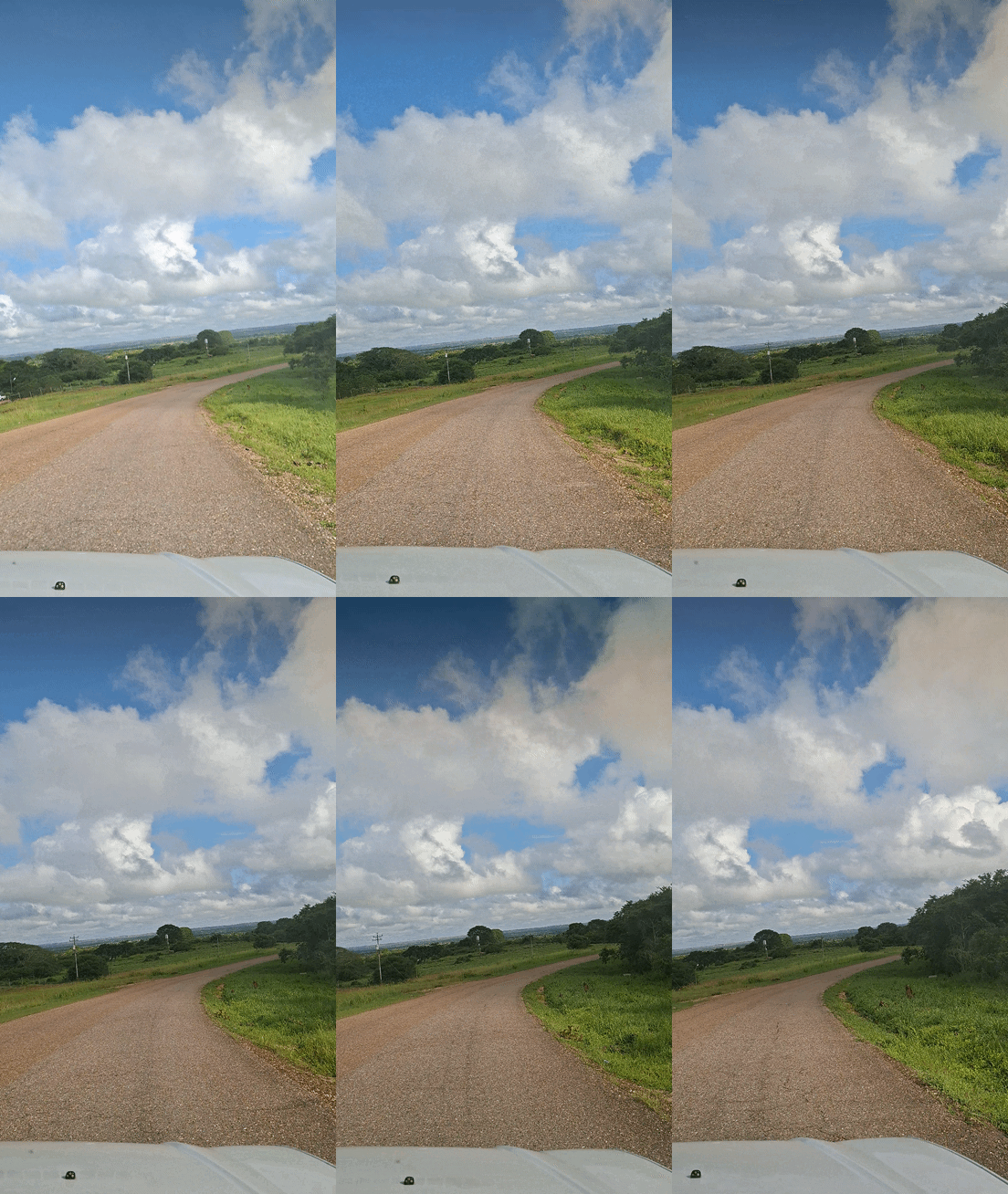
Por otra parte, podemos llegar a creer que actuar sin pensar es actuar con audacia, hasta puede hacernos sentir valientes. Pero ejecutar un plan a ciegas, puede tener un alto costo.
Una de mis premisas es, que nada en exceso es bueno. Y claramente, aquí aplica.
La idea no es quedarnos mucho tiempo paralizados ante cada decisión que debamos tomar, con el planteamiento de que hay que pensarlo bien, pero tampoco podemos accionar a la ligera, sin haber evaluado los riesgos mínimos y saltándonos por completo la planificación de lo que haremos después.
Y aunque suena fácil, a veces no consigo determinar cuánto es suficiente.
On the other hand, we may come to believe that acting without thinking is acting with boldness; it can even make us feel brave. But carrying out a plan blindly can come at a high cost.
One of my guiding principles is that nothing in excess is good. And clearly, this applies here.
The idea isn’t to remain paralyzed for too long over every decision we have to make, under the assumption that we have to think it through carefully, but neither can we act rashly, without having assessed even the minimal risks and completely skipping over planning what we’ll do next.
And although it sounds easy, sometimes I can’t figure out how much is enough.

Creo que, cuando se trata de tomar decisiones de situaciones reversibles, no hay que gastar tanto tiempo pensándolo, porque si sale mal, podemos volver a empezar, sin pagar un alto costo.
Porque puede pasar que gastemos más tiempo pensando empezar algo, de lo que nos costaría aprender por ensayo y error. Más vale empezar y equivocarse, que nunca comenzar por esperar el momento perfecto (por esta razón tengo en pausa varios proyectos).
Pero si la decisión es trascendental, como un cambio de empleo, una inversión importante, migrar; definitivamente que hay que tener un plan A, B, C, D y E; porque está en juego hasta nuestro sustento, más cuando hay personas que dependen de nosotros y lo que hacemos no nos afecta sólo a nosotros.
I think that when it comes to making decisions about reversible situations, we shouldn’t spend too much time thinking about them, because if it goes wrong, we can start over without paying a high price.
Because it can happen that we spend more time thinking about starting something than it would take us to learn through trial and error. It’s better to start and make mistakes than to never start by waiting for the perfect moment (which is why I have several projects on hold).
But if the decision is momentous—such as changing jobs, making a major investment, or moving abroad—you definitely need to have a Plan A, B, C, D, and E; because even our livelihood is at stake, especially when there are people who depend on us and what we do affects more than just ourselves.

Al llegar a este punto me doy cuenta de que sí es válido que me sienta algo inquieta porque se trata de una decisión importante, pero no debo dejar que eso me mantenga en la zona de no accionar por miedo.
Sólo debo tener fe en que mi plan funcionará (porque al menos tengo un plan).
En lugar de preguntarme "¿y si sale mal?", prefiero pensar "¿Y si sale bien?".
At this point, I realize that it’s perfectly normal for me to feel a little anxious because this is an important decision, but I mustn’t let that keep me from taking action out of fear.
I just need to have faith that my plan will work (because at least I have a plan).
Instead of asking myself, “What if it goes wrong?”, I prefer to think, “What if it goes right?”

Ahora es tu turno: ¿Has estado en alguna situación en la que tomar una decisión te ha costado más de lo que debería? O por el contrario sueles ser impulsiva, actúas y luego piensas. O te sientes cómoda con el equilibrio que logras en dar la justa importancia y tiempo a cada decisión.
Tienes libertad de escribir lo que sea que te haya inspirado esta publicación.
Si es de tu agrado, invita a dos personas a participar y recuerda seguir las reglas de la comunidad.
Now it’s your turn: Have you ever been in a situation where making a decision was harder than it should have been? Or, on the contrary, are you usually impulsive—you act first and think later? Or do you feel comfortable with the balance you strike in giving each decision the right amount of importance and time?
Feel free to write whatever this post has inspired you to share.
If you like it, invite two people to participate, and remember to follow the community guidelines.
Gracias por tu tiempo en este espacio con letras de inspiración y reflexión.
Deseo que cada uno de tus días esté lleno de luz y alegría.
¡Hasta la próxima edición!
Thank you for your time in this space with letters of inspiration and reflection.
I wish each of your days to be full of light and joy.
Until the next edition!

Portada diseñada en Canva.

Fotografías de mi propiedad.

Emojis de Bitmoji.

Separadores hechos con Canva.

Fondos removidos con remove.bg.

Traducción cortesía de deepl.com.
Cover designed in Canva.

Photos of my property.

Emoticons from Bitmoji.

Dividers made with Canva.

Backgrounds removed with remove.bg.

Translation courtesy of deepl.com.
Saludos a la comunidad, estimada @syllem, me encanta la iniciativa, gracias por compartirla, a continuación mi pequeño aporte:
https://peakd.com/hive-139925/@cautiva-30/pensarlo-bien-o-no-pensarlo-tanto-despierta-para-seguir-sonando-or-think-carefully-or-not-to-overthink-it-wake-up-to-keep-dreami