From 1 Well to 25: How the Hive Community Brought Clean Water to Ghana


In rural Ghana, the day begins before sunrise with a walk. Women set out with jerrycans balanced on their heads, children trailing behind them, heading toward whatever water source is closest – a stream, a hand-dug well, or a stagnant pond. Sometimes the walk is two kilometres. Sometimes it's six. And at the end of it, the water they carry home often isn't safe to drink.
That's the part people outside these communities struggle to picture. It isn't just the distance. It's that after all that effort, the water still makes their children sick.
The knock-on effects run deep. Children miss school – sometimes because they're fetching water, sometimes because they're recovering from waterborne illness. Families lose hours every single day to a task that produces nothing but survival. Household money that should go toward food or school fees gets spent on sachet water instead. And underneath all of it sits a quiet, constant worry that a mother carries to bed every night.
This isn't a convenience problem. It's a dignity problem. Clean water is not a luxury, and the fact that millions of Ghanaians still don't have it is not acceptable.
So in 2022, we decided to stop waiting for someone else to fix it.

My name is Sam — @mcsamm on Hive. I'm a Ghanaian who happens to believe that technology is only worth something when it changes what happens on the ground.
I had been travelling to remote communities across the country for years, and the same scene kept repeating itself. Different region, different tribe, different dialect — same walk, same jerrycan, same unsafe water. At some point you either look away or you do something.
The first borehole went into a community in the Ashanti Region in June 2022. We funded it through a proposal on the Hive blockchain, drilled it, tested it, and handed it to the community. Over 500 people now draw clean water from it daily.
Standing at that water point on commissioning day and watching children fill buckets from a tap instead of a stream — I understood two things at once. First, that this was the work. And second, that one borehole was nowhere near enough.

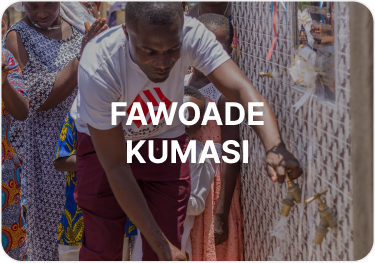
Borehole 1 – Fawoade – Kumasi
|
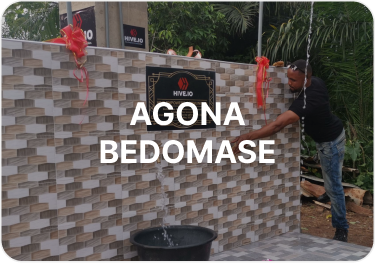
Borehole 2 – Agona Bedomase
|
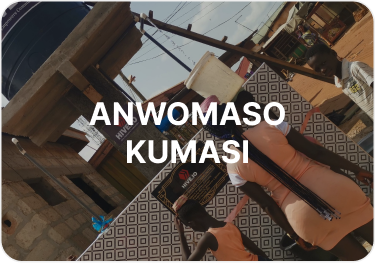
Borehole 3 – Anwomaso – Kumasi
|
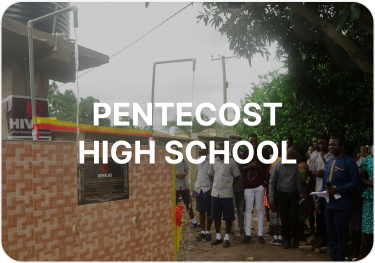
Borehole 4 – Pentecost High School
|
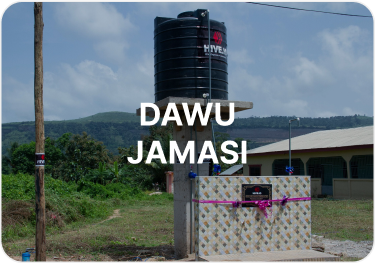
Borehole 5 – Jamasi Dawu
|
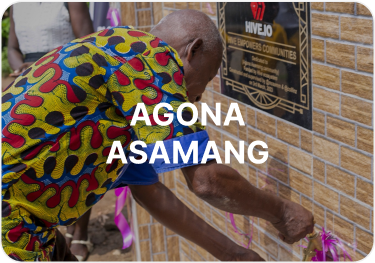
Borehole 6 – Agona Asamang
|
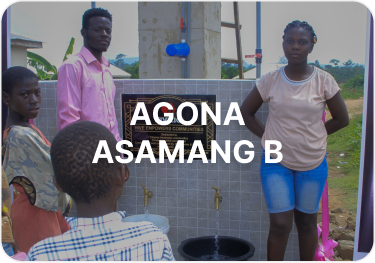
Borehole 7 – Agona Asamang B
|
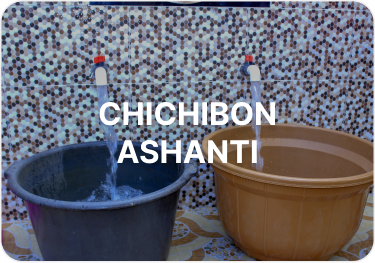
Borehole 8 – Chichibon Ashanti
|
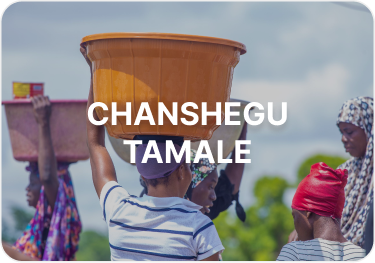
Borehole 9 – Chanshegu – Tamale
|
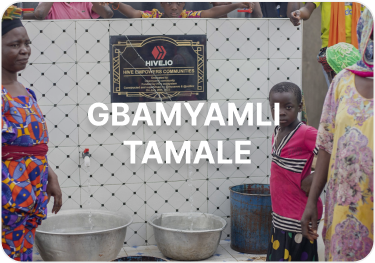
Borehole 10 – Gbamyamli – Tamale
|

Borehole 11 – Kanvili Kukuo – Tamale
|
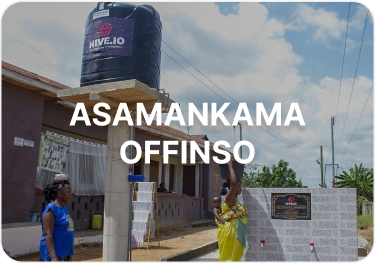
Borehole 12 – Asamankama – Offinso
|
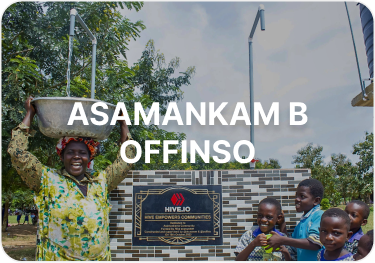
Borehole 13 – Asamankam B – Offinso
|
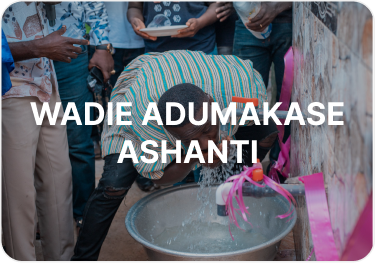
Borehole 14 – Wadie Adumakase – Ashanti
|
Borehole 15 – Nantong Kpawumo – Tamale
|
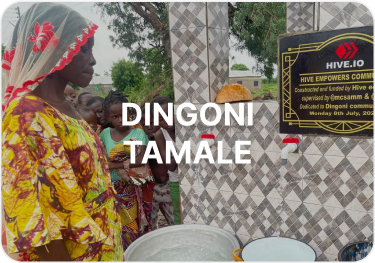
Borehole 16 – Dingoni – Tamale
|
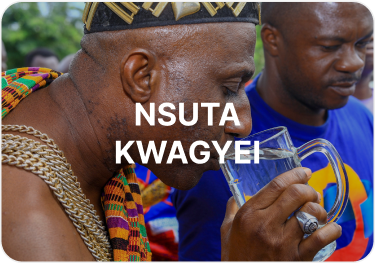
Borehole 17 – Nsuta Kwagyei
|
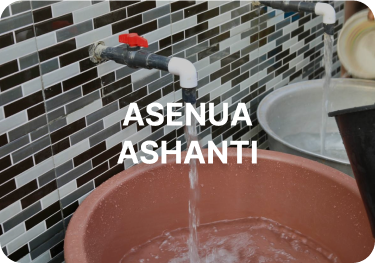
Borehole 18 – Asenua – Ashanti
|
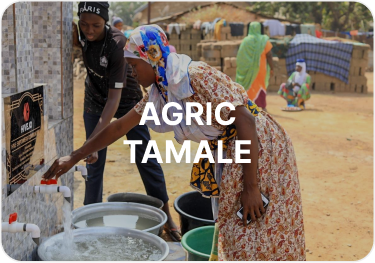
Borehole 19 – Agric – Tamale
|
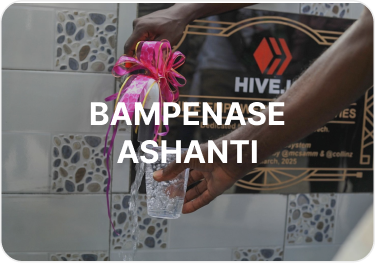
Borehole 20 – Bampenase – Ashanti
|

Borehole 21 – Asomanya – Ashanti
|
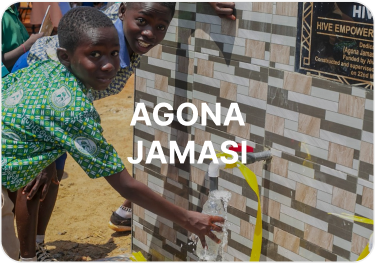
Borehole 22 – Agona Jamasi
|

Borehole 23 – Wurapong – Ashanti
|

Borehole 24 – Barekese – Ashanti
|

Borehole 25 – Adgiss Ntonso – Ashanti
|
Every borehole listed above is operational. Every one was drilled, tested to WHO standards, fitted with a protected water point, and formally handed over to the community that now owns it. Every one has its own dedicated post on this blockchain, with photos, costs, and progress updates recorded permanently on-chain.
You can trace any project on this list from the first donation to flowing water. That's not a claim — it's a link you can click.
Here's what makes this project different from almost every other water NGO operating in Ghana: not a single one of these boreholes was funded by a traditional grant, a government contract, or an institutional donor.
They were funded by the Hive community.
Through the Hive DAO — the Decentralised Autonomous Organisation — we submitted proposals directly to the blockchain. The community reviewed them. The community voted. And when a proposal passed, funding was released without a committee, without a six-month approval cycle, and without the layers of bureaucracy that make traditional development funding so slow that communities give up waiting.
That speed matters more than people realise. When a village has no clean water, "we'll get back to you next quarter" isn't an answer. It's another three months of children drinking from a stream.
Hive removed that friction entirely. Online engagement became offline infrastructure. Votes became boreholes. Tokens became taps.
For anyone who's ever wondered whether blockchain governance actually works in the real world, there are 25 water points across Ghana that answer that question.

We don't just drill and leave. We track what happens next, and the same patterns show up in community after community:
Waterborne illness drops sharply. Diarrhoea, typhoid, and cholera cases fall within weeks of commissioning. Local clinics report dramatically fewer water-related cases within the first year.
School attendance rises. At Agona Jamasi, attendance jumped 27% in the first month after the borehole was commissioned. Children who'd been missing class to fetch water or recovering from illness simply came back.
Households save real money. Families who were spending GH₵120 or more every month on sachet water now spend nothing. That money goes to food, school fees, and healthcare instead.
Women get their mornings back. The four-hour daily water walk disappears. That time returns to farming, trading, childcare, and rest.
Beyond the water itself, every community that received a borehole also received free health screening and WASH education. Hundreds of educational materials have been distributed to local schools. Because a well without the knowledge to protect it is only half a solution.

A borehole can serve a community for 10 years or more — but only if someone plans for year two.
Across Sub-Saharan Africa, an estimated 30–40% of water points are non-functional at any given time. Not because the water ran out, but because the maintenance plan did. A pump breaks, nobody has the part, nobody has the money, and a community that had clean water goes back to the river.
We built a three-layer model to make sure that never happens to a WellsForAll project:
Layer 1 — Community ownership. We train a local water committee before the project is commissioned. They handle daily operations and minor repairs. The water point belongs to them.
Layer 2 — The water fund. Small, affordable community contributions go into a dedicated maintenance fund, so when a part needs replacing, the money is already there.
Layer 3 — WellsForAll oversight. We provide ongoing monitoring and technical support for every borehole we've built. If something exceeds what the community can handle, we step in. This safety net has no expiry date.
Three layers, each reinforcing the others. That's how a water project becomes a water system.
Every donation. Every expenditure. Every project update.
All of it published on the Hive blockchain — permanently accessible, tamper-resistant, and verifiable by anyone, from anywhere, forever.
When you contribute to a WellsForAll project, you don't just get a thank-you email. You get a permanent on-chain record linked to your contribution. It cannot be altered, backdated, or deleted. Not by us. Not by anyone.
No other local water NGO in Ghana operates at this standard. We think that should change — and we're happy to be the ones proving it's possible.

This didn't happen because of one person. It happened because a community on the internet decided that clean water in Ghana was worth funding.
To my co-founder @collinz — you connected the dots that made this real. What we've built together goes well beyond infrastructure.
To @valueplan, @guiltyparties, @theycallmedan, @starkerz, @blocktrades, @threespeak, @gtg, @buttcoins, @shadowspub, @hivetoday, @deep.pizza, @oflyhigh, @smooth, @stoodkev, @elmerlin, @themarkymark, @pharesim, @alessandrawhite, @steevc, @ackza, @mynewlife, @rubencress, @hivecreators, @solarisfuture, @abenad, @hive.ghana, @lordbutterfly, @crimsonclad, @offgridlife, @adetorrent , @missbitcoin-sv, @melinda010100, and @acidyo — your votes, your support, and your belief built these water points.
And to the local chiefs, community leaders, and media houses in Ghana who opened doors and vouched for us before we had a track record — thank you for trusting the vision early.
Twenty-five boreholes is worth celebrating. It is not worth stopping at.
There are hundreds of communities across Ghana still walking to unsafe water this morning. Borehole #26 is already in progress. After that, #27. We intend to keep going until this problem stops being a problem.
We're also expanding beyond the drill. WASH education in schools. Tech skills training for girls in the communities we serve. Waste management advocacy — because the plastic dumped in a city gutter ends up in the river a village drinks from.
Clean water is the foundation. What we build on top of it is what changes a generation.

Donate directly:
Hive/HBD : @wellsforall
USDT (TRC20): TBxSscosxvvYLqvU36uuwLUXTV5dScmk4c
Become a WellKeeper;
a monthly commitment that funds ongoing maintenance for existing boreholes:
wellsforall.org/wellkeeper
Support our proposals on the Hive DAO when they go live.
Share this post. Visibility turns into funding. Funding turns into water.
Connect With WellsForAll
🌍 Website: www.wellsforall.org
📧 Email: [email protected]
🐝 Hive: @wellsforall • @mcsamm • @collinz
LinkedIn • Facebook • Instagram • X/Twitter • YouTube
WellsForAll Africa LBG ·
Registered in Ghana, Reg. No. CG080641125 ·
Operating since 2022
Water. Hope. Life.

Congratulations @wellsforall! You have completed the following achievement on the Hive blockchain And have been rewarded with New badge(s)
Your next target is to reach 800 upvotes.
You can view your badges on your board and compare yourself to others in the Ranking
If you no longer want to receive notifications, reply to this comment with the word
STOPHow do we get this in Kenya, Gambia, Nigeria and other African countries???
This is an initiative that will help thousands of people in Africa. Interested people must follow the process to get their proposals submitted through the DHF. @be-connected
Wells done! ;-)
Thank you so much for your continuous support.